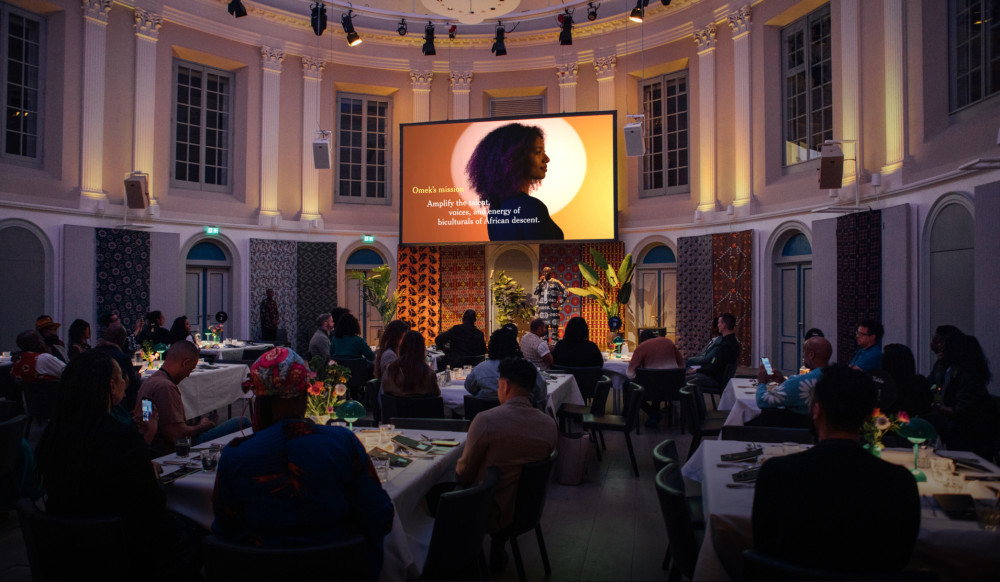
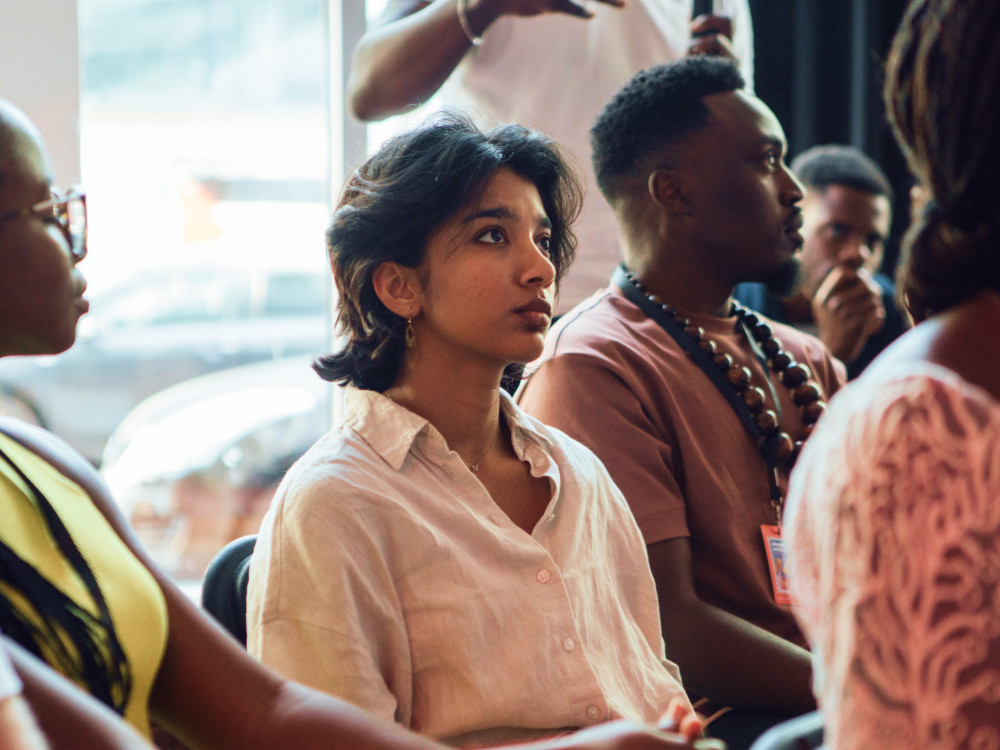
"What you said five years ago about your identity is different from what you would say today," says Sandra Roberts. It's a good summary of the first episode of The Bicultural Edge, where Omek founder Kemo Camara talks with the team behind the community, Sandra Roberts, Benjamin Sam and Sofia Lobo, about growing up between cultures and building a life in Europe.
What does it mean to be bicultural?
Being bicultural means growing up between two cultural frameworks and learning to move between them. For some people that starts at birth, with a heritage culture at home and another one outside. For others it begins later, after a move for study or work.
The guests reach it from different directions, but they agree on one thing. Identity isn't fixed. It shifts as you move, meet new people and ask new questions about where you come from. Several of them describe a moment when two cultures felt like they clashed, followed by the realisation that they could sit together.
Why does community matter for bicultural professionals?
Community gives you a place where you don't have to explain yourself. "Belonging starts with safety and then it starts with feeling like you can be yourself," Ben says.
It also has a practical side. Moving to a new country often means starting without a network or a mentor. A community of people with similar experiences shortens that road. The episode makes the point that what you give to a community tends to come back to you, often through people who make time for you when you need advice.
That idea is behind Omek, and behind a job board for biculturals.
Is being bicultural an advantage at work?
It can be, if you describe it concretely. On your CV, name your cultures, languages and the countries you've lived in instead of writing "multicultural background". Community and volunteer roles count too. In interviews, prepare one short story where you had to read two sets of expectations at once, because that's a skill most teams need.
When choosing employers, look at how they work day to day. Try to find out how teams share credit, who mentors whom, and whether people with backgrounds like yours hold senior roles. Then browse jobs on Omek.
Quick answers
- What is The Bicultural Edge? Omek's podcast for bicultural professionals, the African diaspora and friends.
- Who is in episode 1? Kemo Camara (Omek CEO) with Sandra Roberts, Benjamin Sam and Sofia Lobo.
- How do I get involved? Join the Omek community for free, or come to the free office hours, held every other Thursday.
"Find your people," Ben says at the end. Start with a job profile on Omek.